

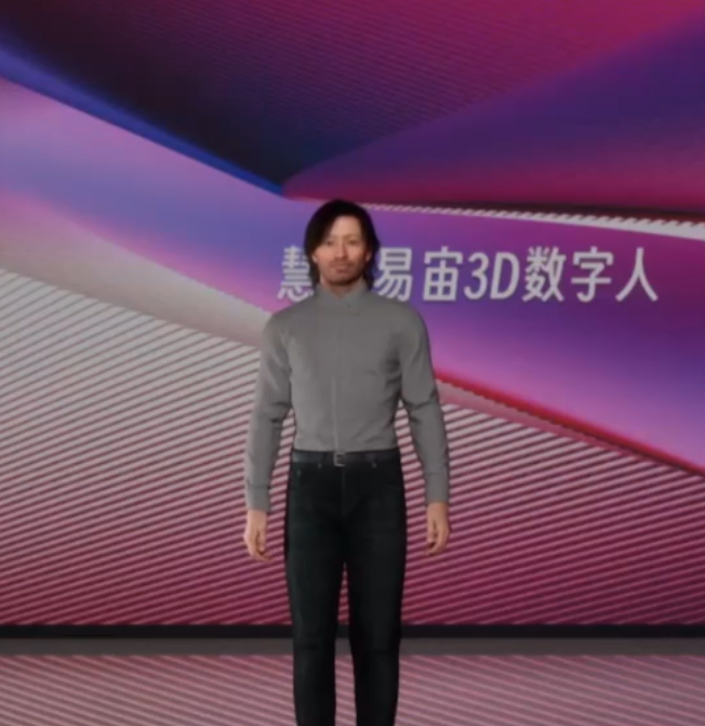
3D AIVROOL AI AVATAR
AIVROOL CO
3D AI Virtual Avatar Multi-Scenario Application Solution:
Editor's evaluation: TRY!
3D AI Virtual Image Multi-Scene Application Solution: Intelligent Interaction System Connecting Open Source LLM and Local AI Server I. Program Background and Core Values With the acceleration of digital transformation, traditional text or 2D customer service and presentation modes have been difficult to meet users'needs for immersive and anthropomorphic interaction. 3D AI Avatar (3D Artificial Intelligence Virtual Image) has become the key carrier to connect "virtual service scene" and "real user needs" by virtue of highly simulated visual presentation and natural voice interaction capabilities. This scheme focuses on the landing of 3D AI virtual image in six core scenarios, namely, online customer service, reception, sales transformation, 3D environmental product demonstration, teaching guidance and internal collaboration, by docking with the latest open source cloud LLM model (such as Llama 3, Qwen-7B, etc.) Or privatized deployed local AI servers. Realize the closed-loop of "customized knowledge training + real-time intelligent interaction + scenario-based visual presentation" to help enterprises reduce operating costs, improve service efficiency and user experience. The core value is embodied in three aspects: Scenario adaptability: support the cross-end deployment of 3D virtual environment (such as meta-universe exhibition hall and virtual store) and traditional 2D interface to meet the visual and interactive requirements of different business scenarios; Knowledge controllability: The model can be trained based on the script, product manual and internal knowledge base specified by the enterprise to ensure the accuracy and compliance of the output content of the virtual image; Cost flexibility: Provide two modes of "Open Source Cloud LLM Lightweight Deployment" and "Local AI Server Privatization Deployment" to meet the lightweight needs of small and medium-sized enterprises and the data security requirements of large enterprises. II. Core Application Scenario and Function Design (I) Online customer service scenario: 7 × 24 hours anthropomorphic problem solving Application scenarios: E-commerce platform after-sales consultation, SaaS product technical support, financial business Q & A, etc.; Core functions: Real-time voice interaction: support multi-language recognition and synthesis, voice intonation can be customized (such as cordial type, professional type), with 3D image of lip synchronization, expression changes (such as smiling, nodding), to enhance the sense of reality of interaction; Accurate knowledge response: based on the training model of the customer service database uploaded by the enterprise (such as return and exchange policy, product parameters), when the user asks "how to apply for a refund", the virtual image can quickly give the steps, and call the 3D animation to demonstrate the operation process (such as the interface simulation of clicking the refund button); Complex problem transfer: When encountering problems beyond the scope of the knowledge base (such as customization requirements), it will automatically transfer to the manual customer service, and synchronize the previous interaction records to avoid repeated description by the user. (II) 3D environment product demonstration: Immersive experience replaces traditional graphics and text Application scenarios: home appliance disassembly demonstration, automotive interior function introduction, industrial equipment operation teaching, etc; Core functions: 3D scene linkage: the virtual image, as a "commentator", moves in a custom 3D environment (such as a virtual living room or a car cockpit), and triggers the disassembly, rotation and function demonstration animation of product components through gesture pointing (such as pointing to the refrigeration module of a refrigerator); Interactive demonstration: The user can control the progress of the demonstration through voice or text commands (such as "zoom in to view engine details" and "repeat playback operation steps"), and the virtual image responds in real time and adjusts the content of the demonstration; Data visualization integration: if the product involves performance parameters (such as the energy consumption data of the air conditioner and the acceleration time of the automobile), the virtual image can call the chart (such as the broken line chart and the histogram), and combine with the 3D animation to present intuitively (such as simulating the energy consumption change of the air conditioner with the progress bar). (III) Internal enterprise scenario: lightweight training and collaboration tools Application scenarios: new employee induction training, department business process explanation, cross-team project communication, etc.; Core functions: Customized knowledge base: the enterprise can upload internal documents (such as employee manual, ERP system operation guide, project plan), the virtual image can generate training scripts based on the document content, and simulate the office scene through 3D animation (such as "how to submit reimbursement form in ERP system"); Real-time Q & a interaction: During the training, employees can ask questions at any time (such as "which approvers are needed for the reimbursement form"), and the virtual image can answer them immediately, and support multi-round dialogue (such as asking "how long will the approval process take"); Data security: The local AI server deployment mode is adopted, and all knowledge base data is stored in the internal server of the enterprise to avoid the leakage of sensitive information (such as customer data and core business processes). III. Technical architecture: dual-mode docking of open source LLM and local AI server (I) Overall framework The technical architecture of this scheme is divided into three layers to realize the seamless connection of "3D image presentation-intelligent interaction engine-knowledge data storage": Front-end presentation layer: 3D virtual image engine (based on Unity or Unreal Engine development), supporting image customization (such as enterprise IP image, real person replica image), action expression drive (real-time generation of natural action through AI). No need to bind key frames manually), cross-platform deployment (Web, mobile, VR devices); Core interaction layer: intelligent dialogue engine, responsible for docking with open source cloud LLM or local AI server, processing user voice/text input, generating response content, and synchronously controlling the action and expression of front-end 3D image; Data storage layer: It is divided into "public knowledge base" (such as general greetings and basic interactive speech) and "enterprise private knowledge base" (such as product manuals and internal documents), and supports the import and indexing of structured (Excel) and unstructured (PDF, video) data. (II) Open source cloud LLM docking solution (lightweight deployment) Applicable to: small and medium-sized enterprises, entrepreneurial teams, the pursuit of low-cost, fast online; Docking process: Choose open source LLM model: support docking with mainstream open source models.